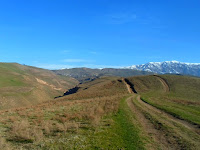
Hills behind Victory Park in Dushanbe, Tajikistan

Hills behind Victory Park in Dushanbe, Tajikistan
Decided to take a walk to the hills behind Victory Park. Overall, the hike didn't go very well, I chose the wrong time, didn't equip myself properly. Also, I didn't fully decide on the final destination of the route, just stood up and started walking. Of course, I didn't get anywhere. As Seneca said: For a ship without a destination, no wind is favorable. In the end, I sat on the top of one of the hills and then went back. I didn't feel like taking photos anymore. Interestingly, when you are not interested, nothing interesting comes your way... haha, that's life.

"Iron" Rations: What to Take on a Hike for an Emergency

Iron Rations: What to Take on a Hike for an Emergency
When heading out on a hike, it's important to anticipate unforeseen circumstances, such as running out of provisions. For this very reason, experienced hikers have an "emergency reserve" — special foods that provide a lot of slowly released energy, are lightweight, and have a long shelf life. Classic examples of this "iron" ration, tried and tested by scouts and travelers, are pemmican and pinole. They are quick to prepare, can be stored for years, and can help you endure a difficult situation.

Hydration on the Trail: How to Find, Purify, and Drink Water Correctly

Hydration on the Trail: How to Find, Purify, and Drink Water Correctly
The human body is resilient, but without water, it cannot survive more than a few days. Water forms the foundation of our bodies and is involved in all vital processes. We lose over 3 liters of fluid daily, and under hiking conditions—due to physical exertion, heat, cold, and altitude—these losses increase significantly. Replenishing them is a top priority.

How to Choose the Right Food for a Hike

How to Choose the Right Food for a Hike
The choice of food for a hike depends entirely on your itinerary and ability to carry gear. If you're backpacking and covering long distances on foot, the priority is lightweight, compact food. For a stationary basecamp accessible by car, you can afford a much wider and heavier range of provisions.

Why Hot Food on the Trail is a Necessity

Why Hot Food on the Trail is a Necessity
You can survive on cold rations, but a hot meal at the end of the day truly warms you up, restores your energy, and boosts your spirits. It becomes a crucial element of survival, helps a team bond around the fire, and provides the strength to overcome challenges. Furthermore, heat treatment not only makes food tastier but also sanitizes it by killing harmful microbes and toxins. Knowing how to cook in the wild is key to staying healthy and feeling good.

Proper Nutrition on a Hike: The Foundation of Endurance and Good Mood

Proper Nutrition on a Hike: The Foundation of Endurance and Good Mood
There's a reason people say the journey is made on a full stomach. A person, like a machine, needs fuel to keep moving forward. The more intense the load—for example, during a long trek with a heavy backpack—the more energy the body expends. A light breakfast that suffices for a quiet day at home will fall short after just a couple of hours on the trail.

How to Properly Build and Maintain a Fire While Camping

How to Properly Build and Maintain a Fire While Camping
In the wild, fire is your indispensable ally. It provides warmth, cooks your food, illuminates your campsite, and creates a unique atmosphere of comfort. The ability to build a campfire is one of the key skills for any traveler. While it may seem like a complex ritual to many, it ultimately comes down to understanding the principles and thorough preparation.

How to Set Up a Comfortable Campsite

How to Set Up a Comfortable Campsite
Even if you're only stopping for a single night, it's worth investing time in basic amenities—organizing a place to sleep and to wash. This isn't about luxury, but about practical comforts you can easily create from natural materials at hand using a bit of ingenuity.

How to Tie Knots and Make Rope Gear While Hiking

How to Tie Knots and Make Rope Gear While Hiking
Knot-tying is one of the most valuable skills for any outdoors enthusiast. However, it requires having rope on hand, which is a resource always in limited supply. To be truly prepared for the challenges of the wild, it's crucial to learn how to create your own cordage—thread, cords, and ropes—from natural materials. Fortunately, this is easier than it seems, and this skill will prove useful far more often than you might think.

Building a Shelter for a Camping Trip

Building a Shelter for a Camping Trip
From the most primitive wigwam to the tallest skyscraper, all human-made structures serve the same fundamental role: to provide protection from rain and snow and to retain warmth. You don't need to be an architect to build a simple shelter. By mastering a few basic principles, you'll be amazed at the variety of man-made refuges you can create.

Popular Posts